
Frank Rebajes, an immigrant from the Dominican Republic, emerged as a key figure in New York City’s mid-century modern jewelry scene. His exceptional craftsmanship and unique style make his pieces highly sought after by collectors and fashion enthusiasts alike. Born in 1907, Francisco was sent to school in Barcelona, Spain, in 1913 with his two older brothers. However, he dropped out and returned home to work in his father’s shoe factory and as a bank collector.
At just sixteen, Francisco Torres arrived in New York in 1922, traveling alone on a steamship. His fluency in English and a $300 gift from his father helped him convince immigration officials to let him enter the country. He adopted the name Frank Rebajes, favoring his mother’s surname for its appeal. Settling in Harlem with fellow Dominicans, he quickly ran out of money and took various jobs as a cafeteria worker, errand boy, and janitor at a photography studio. During part of the Great Depression, he faced unemployment and homelessness.
Frank met Pauline Schwartz at a party. They married in 1932, against the wish of Pauline’s parents. They spent their wedding night on the Coney Island subway line and lived for a few months in the home of a Peruvian friend, Julio Avendaño.
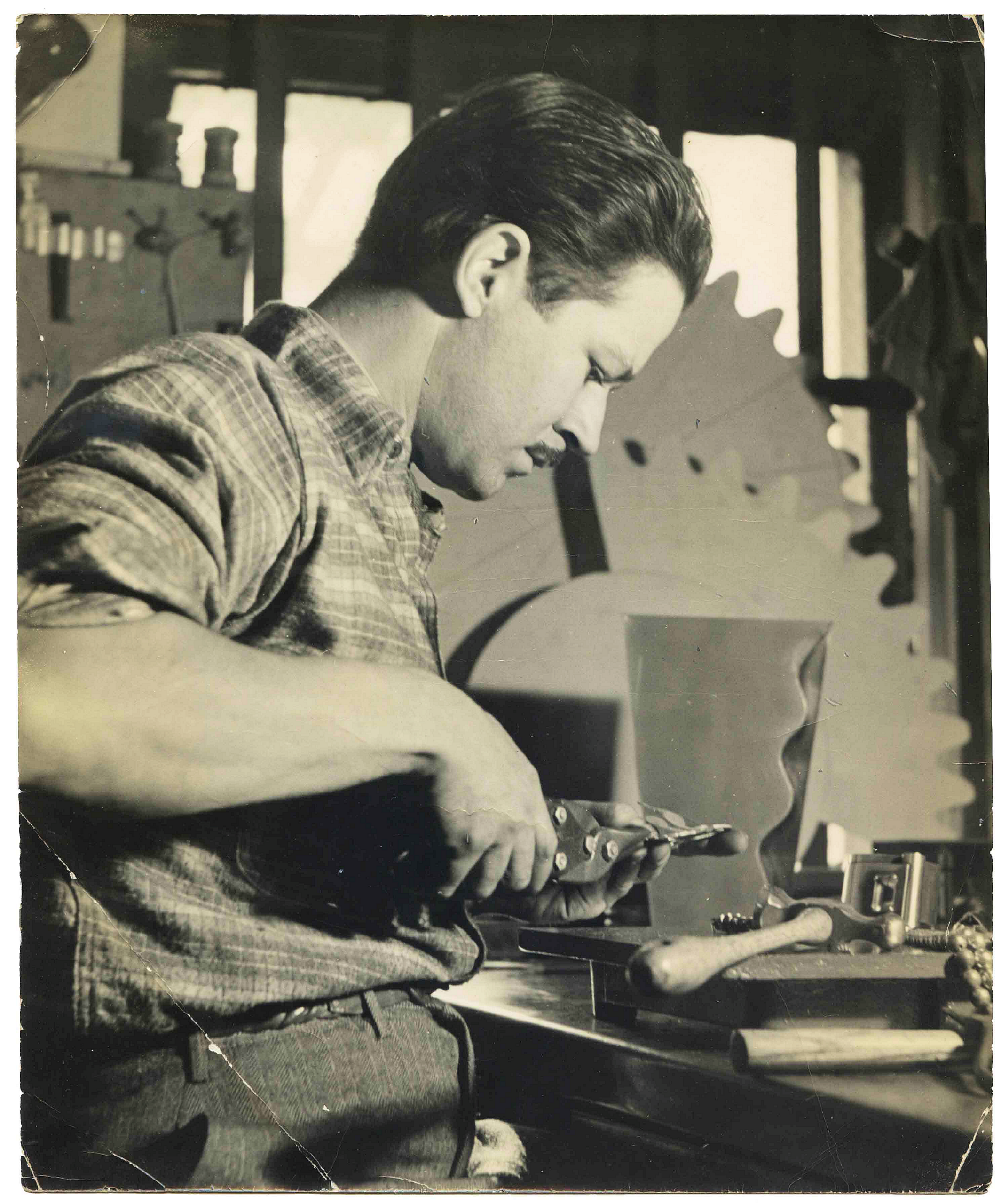
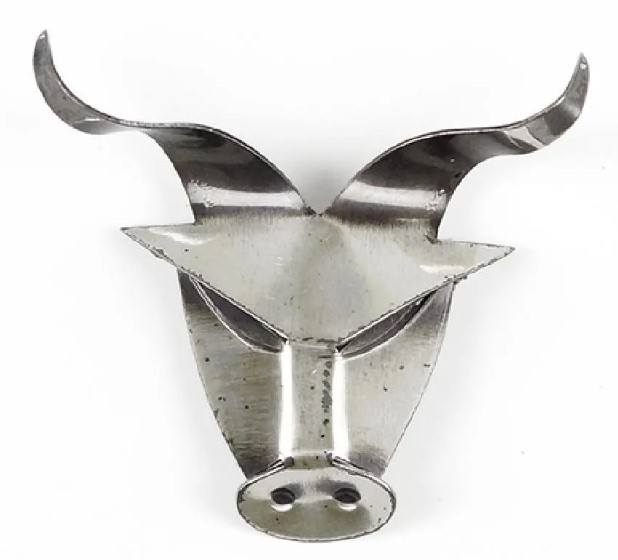
There, Rebajes began making animal sculptures from scrap metal using his friend’s tools. He displayed these works on an ironing board at the Washington Square Park Outdoor Festival in 1932. Juliana Force, the director of the Whitney Museum of American Art, bought the entire collection for $30 (the equivalent of $735 in 2026). With that money he rented a four-foot wide space between two buildings with an improvised roof and a dirt floor that was store, workshop, and house.
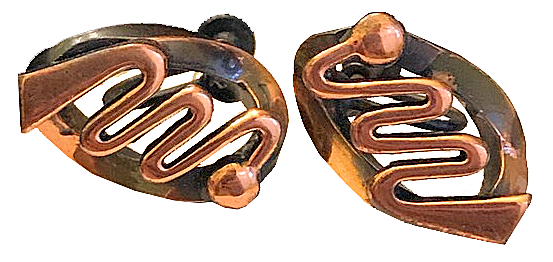
By 1934, he upgraded to a building with a street-facing window, allowing for a dedicated workshop and store. He started crafting jewelry primarily from copper, which became his signature medium, alongside brass, nickel, and silver. While Frank designed the jewelry, Pauline managed customer relations and business operations, pricing all pieces at ten dollars or less. His designs often featured African women and abstract forms.
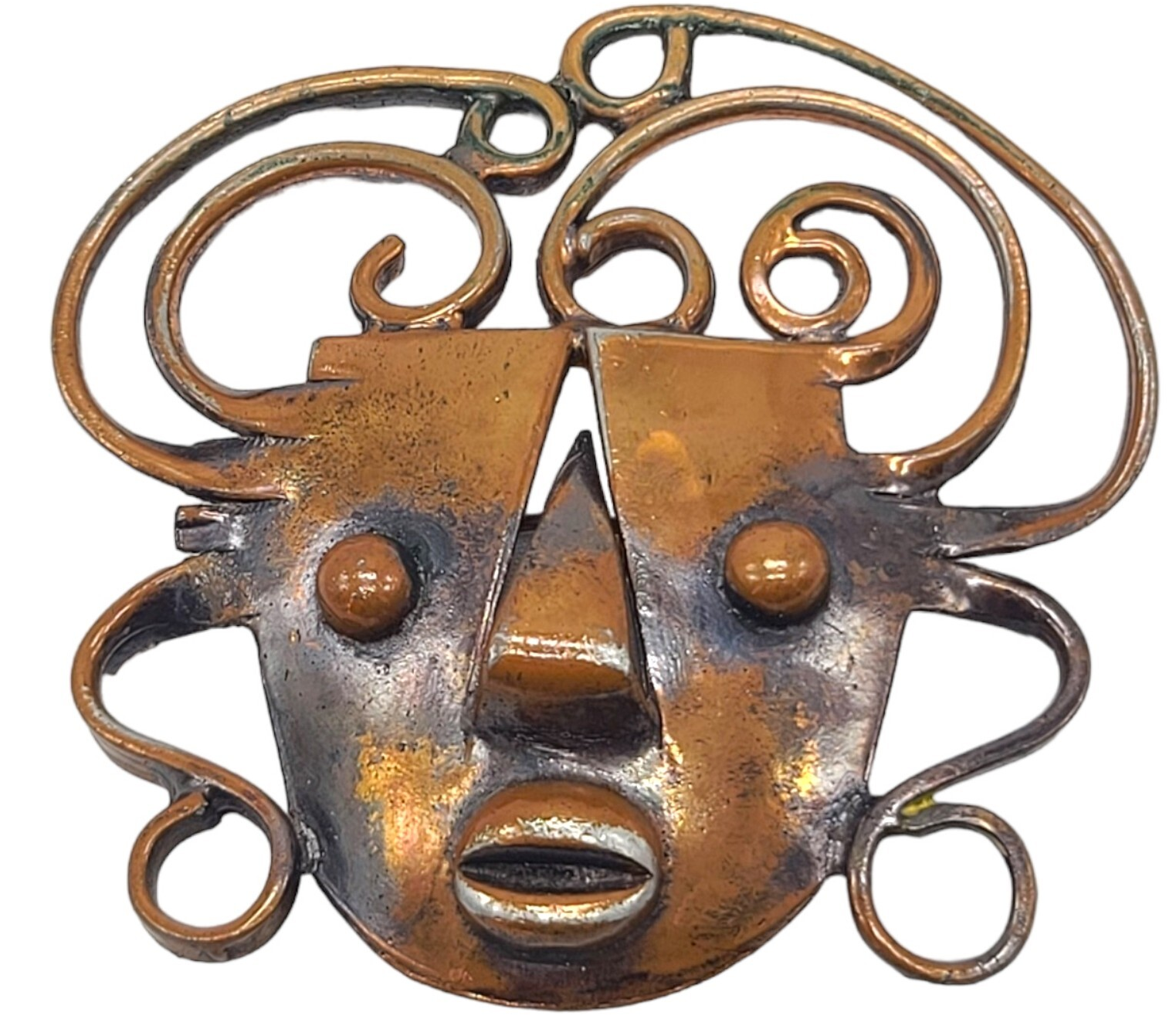
Rebajes had several employees by 1937, including his brother Pedro. He created the “Rebaje∞” logo, cleverly replacing the final S of his name with the symbol for infinity. The Metropolitan Museum of Art invited him to participate in an exhibition on contemporary art,and he participated in another exhibition at the Brooklyn Museum. That same year, he was invited to show at the 1937 Paris World’s Fair where he won a bronze medal for a sculpture. He produced murals for the 1939 New York World Exhibition, and participated in modern industrial design exhibition at the Met.
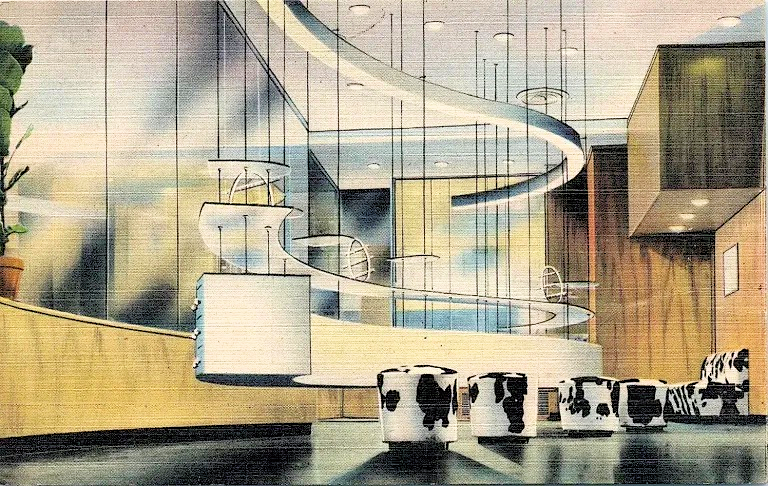
In 1942 he opened a new store to separate the sales space from production. The store was avant-garde and famously had an S-shaped counter, designed by Rebajes, suspended from the ceiling. His business now had 165 employees with a national distribution chain that sold to more than 500 department stores. Pauline and Frank traveled throughout the U.S. to publicize and distribute their merchandise.

The business was sold to Otto Bade, the production supervisor and a close friend of Frank and Pauline, in 1958. After selling the business, Frank and Pauline relocated to Spain, where he continued to create sculptures and handmade jewelry. Pauline died in 1989 after battling Alzheimer’s, and a year later, Frank donated his sculptures to the City of Malaga and to the Picasso Casa Natal Museum Foundation. He traveled to the U.S. to present his work at the prestigious Massachusetts Institute of Technology in Boston. The presentation was a triumph. Tragically, following the event, Rebajes took his own life at his hotel at the age of 83, overwhelmed by depression stemming from the loss of his wife.
As a master of modern jewelry who avoided traditional materials and used copper and other base metals, his jewelry reconciles craftsmanship with mass production. The legacy of Rebajes continues as collectors and fashion enthusiasts seek out his work.